 EN

Material Feeding Basics for Pharmaceutical Manufacturing
In pharmaceutical manufacturing, material feed is more than moving powder from one container to another. It is the controlled handoff of raw material, blend, or granules from a storage point into the next process step. A well-planned material feed path helps production teams see where material is, what conditions may affect it, and where operators need to intervene. For solid dosage workflows, this basic discipline supports more orderly movement between dispensing, blending, sizing, compression, and related operations.
From an operations viewpoint, the practical question is simple: can the required material reach the next unit operation at the right time and in a condition that suits that step? The answer depends on the material, the container, the transfer route, and the way the line is operated. This article introduces the essential concepts without assuming that one layout or equipment choice fits every product.
What Does Material Feed Mean in a Pharmaceutical Process?
At its core, material feed controls the movement of bulk material such as powders or granules. In many production settings, it describes delivery from a hopper, bin, drum, or intermediate container into a processing system. In pharmaceutical manufacturing, the same idea must be considered alongside product handling, cleaning expectations, batch procedures, and the next operation's requirements.
A feeding step may be manual, assisted, or more automated. Regardless of the method, the route should make it clear where material enters, how it is lifted or transferred, how it is discharged, and who verifies the handoff. The objective is not simply to keep material moving. It is to make each transfer understandable and controllable within the actual process.
Common Material Transfer Nodes
Material movement is usually easier to evaluate when it is broken into nodes rather than treated as one continuous action. Typical nodes can include:
- Receiving and staging: materials arrive, are identified, and are positioned for the next approved activity.
- Dispensing or charging: a measured or prepared material is introduced into a blender, mill, hopper, or other process unit.
- Intermediate holding: the material waits in a bin, drum, or IBC before the next transfer.
- Process-to-process transfer: material moves from one operation to another, such as from blending to sizing or from a hopper to a downstream machine.
- Final discharge: processed material is released to the next approved container or production step.
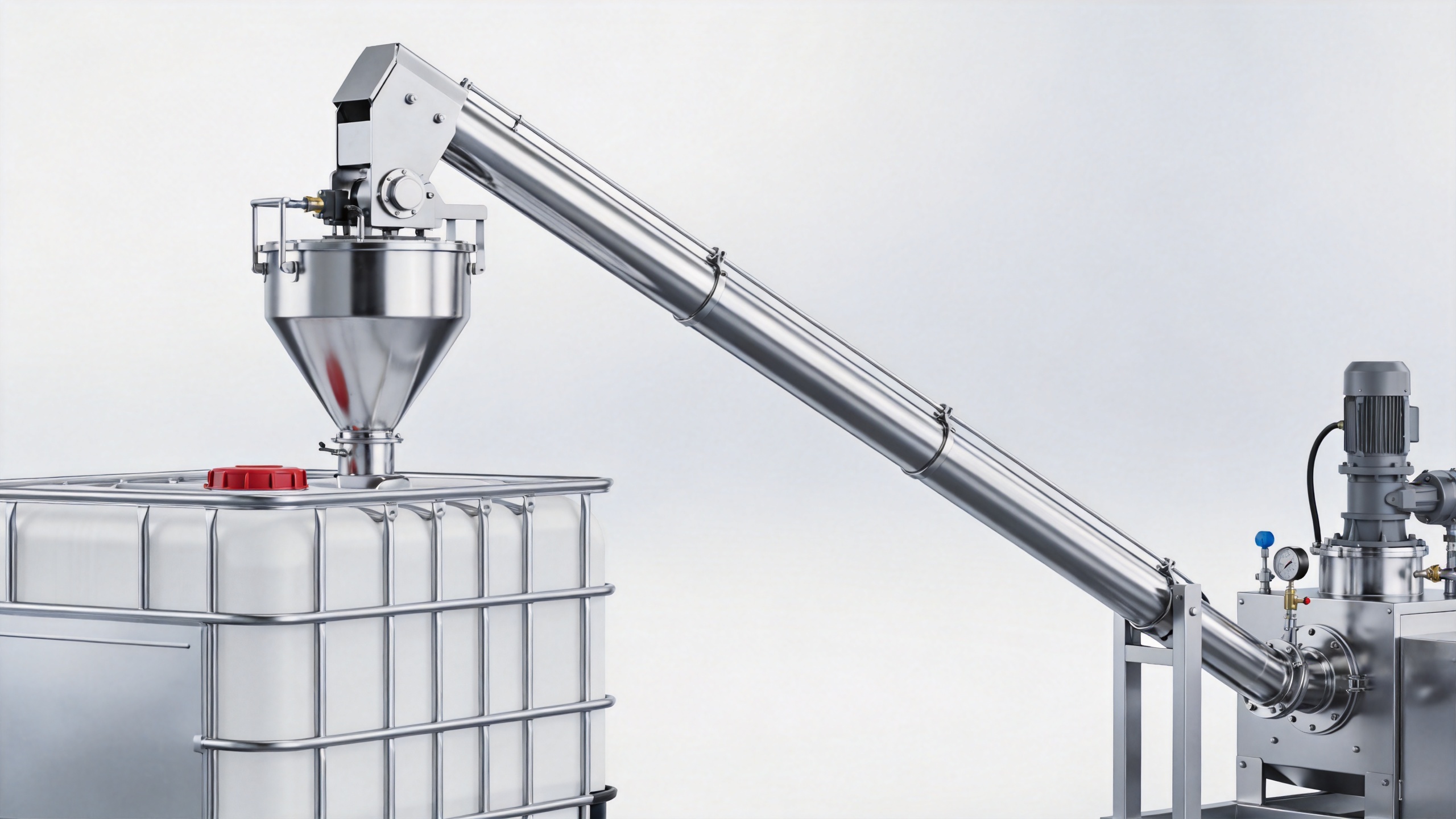
Each node deserves its own questions. Is the container compatible with the material state? Is the discharge point accessible for the operator? Does the next machine require a steady supply, or does it receive material in batches? A useful material feed review follows the process route and checks these interfaces one at a time.
Start with the Material, Not the Equipment
It is tempting to begin with a machine model or a desired throughput. More accurately, the starting point should be the material itself. Powder flow behavior, bulk density, particle condition, moisture sensitivity, and tendency to form bridges or lumps can all influence how a feeding step behaves. The downstream requirement matters as well: a process that needs steady delivery may need a different approach from one that accepts discrete batch transfers.
Before deciding how to arrange a material feed step, production and process teams can clarify a short list of inputs:
- What material form will be transferred: powder, granules, blend, or another intermediate?
- What is the source container and what is the destination equipment?
- Is the transfer batch-based or continuous?
- What handoffs require operator verification?
- What cleaning, changeover, or access conditions should be assessed for the route?
These questions do not replace project-level testing. They do create a more useful starting point than comparing equipment by a single parameter.
Reducing Manual Handling Through Better Route Design
Reducing unnecessary manual handling is a common goal in pharmaceutical material transfer. It can mean fewer lifting actions, fewer open transfers, clearer container positions, or simpler handoffs between machines. The appropriate level of assistance depends on the material, facility layout, batch size, and operating procedure.
For example, a fixed lifting and charging unit may be evaluated as part of a defined transfer route when a container needs to be positioned for charging a downstream unit. The value of the route is not implied by the product name alone; teams still need to confirm container compatibility, reach, discharge arrangement, cleaning access, and the operating sequence. Where it fits the project requirements, a fixed lifting charging machine can be reviewed as one confirmed product-page option within that discussion.
A practical improvement often comes from mapping each physical touchpoint. Ask where the operator opens, moves, aligns, verifies, or closes the system. Then distinguish actions that are necessary for the procedure from actions created by an awkward route. This approach keeps the discussion grounded in the actual workflow rather than assuming that more automation is the answer in every situation.
Key Checks Before a Material Feed Step Starts
Clear preparation helps make a material feed step more consistent. A pre-start review can include the identity and status of the source container, the destination equipment's readiness, the condition of contact surfaces, the availability of the required tools, and the documented sequence for the batch. If the material has known flow challenges, the team should make that condition visible in the operating discussion instead of discovering it only after a transfer slows down.
| Checkpoint | Why It Matters |
|---|---|
| Source material and container status | Confirms that the intended batch and container are ready for the transfer route. |
| Destination equipment readiness | Helps avoid feeding material into a unit that is not prepared for the next operation. |
| Transfer path and alignment | Supports a controlled handoff between the source and destination points. |
| Operator access and sequence | Clarifies where manual actions are required and where procedural checks occur. |
| Cleaning and changeover considerations | Ensures these conditions are considered before the route is used for a batch. |
The exact checklist should follow site procedures and the requirements of the specific project. A general article can identify the questions, but it cannot validate a particular production line.
Material Feed Is a Process Interface, Not an Isolated Task
A material transfer can look routine when viewed alone. Its importance becomes clearer when it is treated as an interface between process steps. Upstream material preparation affects how easily the next unit receives material; downstream equipment affects the feed rate, container choice, and handoff method that make sense. That is why a material feed discussion should involve both the sending and receiving sides of the line.
For awareness-stage planning, the most useful next step is usually to document the route: source, container, lift or transfer method, destination, operator actions, and cleaning or verification points. Once those inputs are visible, a project team can decide which items need further evaluation. This provides a clearer basis for discussing material handling equipment without making assumptions about performance, validation, or compliance outcomes.
Material Feed Review Questions for a Production Team
A short material feed review can make the route easier to discuss. Start by asking whether the material feed source, container, and destination are clearly identified. Next, confirm whether the material feed route matches the batch sequence and whether the material feed handoff can be observed safely by the assigned operator.
Teams can also ask whether the material feed point is accessible for routine preparation, whether the material feed arrangement introduces unnecessary lifting, and whether the material feed destination is ready before the container is positioned. If a powder behaves differently after storage or transport, that condition should be noted before the material feed begins.
These questions are deliberately basic. They help production, engineering, and quality discussions use the same language when reviewing a material feed route. A documented material feed map can show the source container, movement method, charging point, receiving equipment, and procedural checks. It can also identify where a material feed sequence needs project-specific confirmation.
In practice, a stable material feed approach is built from small, visible decisions rather than a single feature. The right material feed design depends on the material, the approved workflow, and the facility conditions. Any change to the material feed route should therefore be reviewed against the applicable site procedures and project documentation.
Conclusion
The basics of pharmaceutical material feed begin with controlled movement, clear transfer nodes, and an honest view of the material and workflow conditions. Start with the product form and the downstream need, then map each handoff and operator touchpoint. Whether a route is primarily manual or uses lifting and charging support, the goal is the same: create a process path that is understandable, practical to operate, and ready for project-specific confirmation.