
 EN

How to Compare Tablet Deduster Configurations for Your Line
Choosing a tablet deduster is not simply a matter of matching a nominal output to a tablet press. The unit sits at a handoff between compression, inspection, and downstream handling, so its enclosure, elevation, cleaning approach, and connections can either support a stable line or create recurring interventions. For pharmaceutical teams comparing a tablet deduster with an optional waterproof metal detector, the productive starting point is to separate dedusting requirements from inspection requirements, then define how the two functions will connect.
From a procurement viewpoint, first document the tablet type, planned operating pattern, available line space, dust-control expectation, and cleaning method. That creates a configuration brief that production, engineering, quality, and purchasing can all review. A waterproof metal detector may be relevant when an in-line inspection point is required, but it should not be treated as a substitute for a correctly configured deduster.
Start with the process interface, not the catalogue model
A deduster must physically and operationally fit the press discharge and the next process. Confirm the tablet press outlet height, transfer direction, tablet size range, tablet strength, and whether the downstream path includes a sorter, metal inspection device, or packing machine. Published market guidance notes that inlet adapters can be used to accommodate different press-discharge arrangements; that is why interface drawings should be reviewed before a purchase decision.
Ask for the allowable height adjustment, connection diameters, support arrangement, and the route for rejected or diverted tablets. If the line will include a waterproof metal detector, also map the available straight conveying section, product flow direction, control signals, and reject path. More accurately, the critical question is not whether a waterproof metal detector can be added, but whether the combined system preserves controlled tablet transfer without unnecessary drops or inaccessible sections.
Compare containment by the dust risk and room strategy
Tablet dedusters are commonly offered in open, dust-tight, wash-in-place, and clean-in-place-oriented configurations. Each category should be assessed against the powder characteristics, exposure-control approach, and cleaning validation plan for the actual project. An open configuration may suit a line with compatible room controls and manageable dust behavior, while an enclosed arrangement can be more appropriate when the transfer zone needs greater isolation.
Containment is broader than the cabinet itself. Review seals, access doors, dust-extraction connections, cable entries, inspection windows, and the way tablets enter and leave the machine. When a waterproof metal detector is specified downstream, define whether its enclosure rating is needed for washdown, for the surrounding environment, or for a particular cleaning procedure. Do not assume that a waterproof metal detector automatically makes every connected section suitable for the same cleaning method.
Match throughput to real operating conditions
Throughput comparison should use the planned tablet press output and credible operating conditions rather than a headline capacity alone. Tablet geometry, friability, compression residues, conveying path, and product accumulation can affect how comfortably a configuration runs. Ask suppliers to state the conditions behind any throughput figure and identify which tablet characteristics require project confirmation.
For an integrated line, compare the flow capability of the deduster, the optional waterproof metal detector, and every transfer section together. A waterproof metal detector with a different preferred feed condition can become the limiting point even when the deduster itself has sufficient capacity. Include start-up, short stops, changeovers, and reject handling in the review. This turns a simple capacity comparison into a line-level assessment.
Put cleaning and access at the center of the decision
Cleaning needs often determine the more suitable configuration. List all product-contact and dust-exposed areas, then ask how they are accessed, removed, drained, inspected, and reassembled. A design that appears compact can still consume significant time if guards, covers, or connections are difficult to reach. For multiproduct facilities, cleaning instructions and change-part management deserve the same attention as nominal output.
If wash-in-place or clean-in-place capability is under consideration, clarify the site utility requirements, cleaning sequence, drainage arrangements, and evidence expected by the quality team. Review the waterproof metal detector separately: confirm its documented cleaning limitations, sensor-area restrictions, and electrical enclosure requirements. A waterproof metal detector is a configuration element with its own boundaries, not a generic approval for aggressive cleaning of the full line.
Use a comparison matrix before asking for a quotation
| Decision area | What to confirm | Why it matters |
|---|---|---|
| Press connection | Outlet height, adapter, direction, support | Prevents late layout changes |
| Containment | Enclosure, seals, extraction, access points | Aligns equipment with dust-control strategy |
| Cleaning | Manual access, WIP/CIP scope, drainage, reassembly | Supports changeover and validation planning |
| Capacity | Tablet type, actual line rate, short-stop behavior | Tests the whole transfer path |
| Inspection integration | Waterproof metal detector location, signals, rejects, cleaning boundary | Prevents the optional inspection point from disrupting flow |
| Space and service | Footprint, service clearance, utilities, safe access | Reduces installation and maintenance surprises |
For each row, assign an owner and record whether the answer is confirmed, assumed, or still needs a drawing or trial. Usually, getting the material and layout questions clear first is more effective than comparing model names. If a waterproof metal detector is included, add its acceptance criteria and reject verification to the same matrix.
Plan the tablet deduster and inspection point as one system
In-line tablet-dedusting solutions may be combined with options such as height adaptation, metal detection, diverters, and different containment approaches. That makes early coordination valuable. Decide where the waterproof metal detector belongs, how rejected tablets will be isolated, and how operators will safely inspect the route. Confirm controls integration, alarms, and the mechanical clearance required for servicing both units.
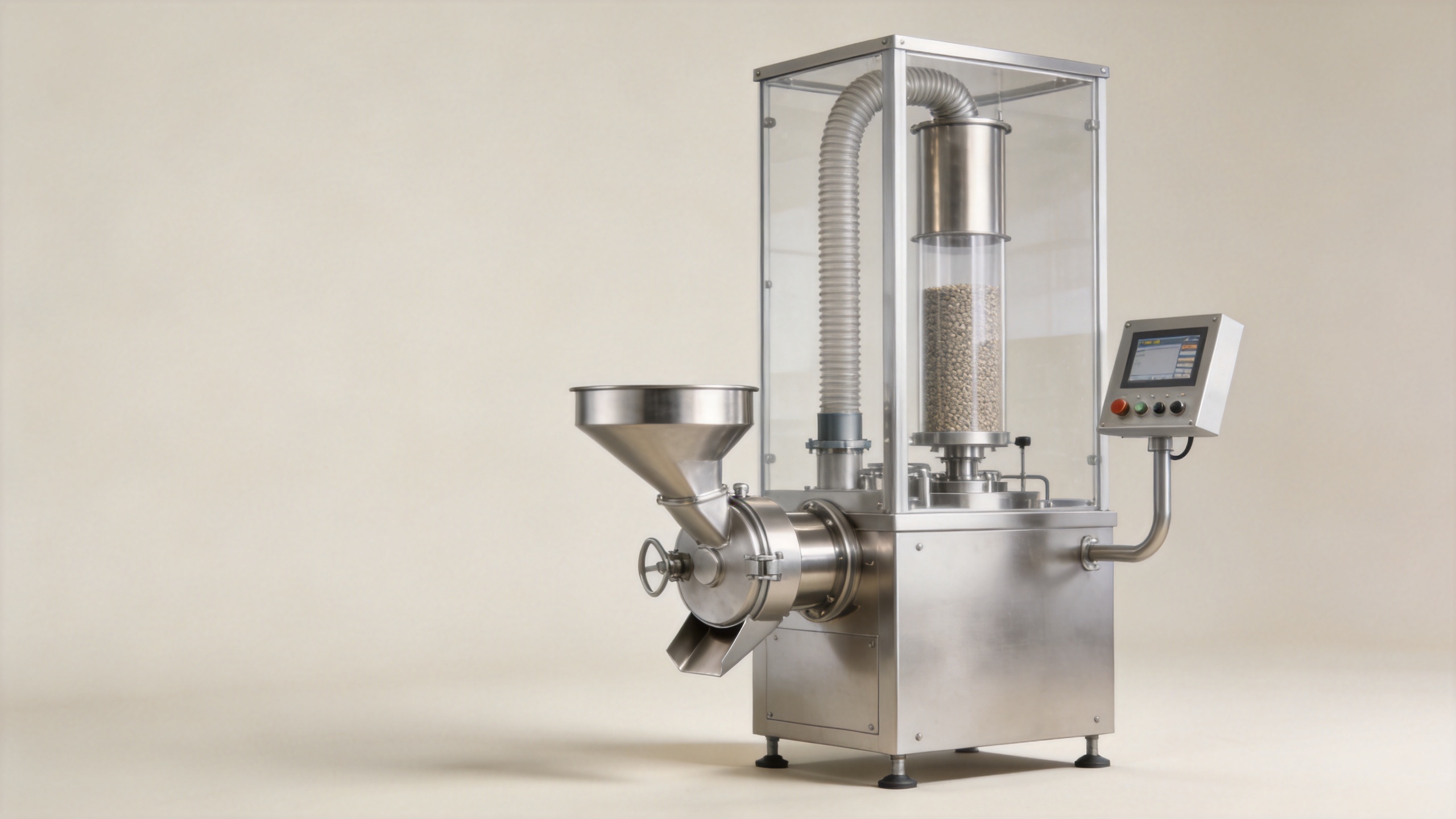
Where a project needs a sealed tablet-dedusting configuration, the product page for the SRA-WIP1000 Airtight Tablet Deduster can be used as a starting point for a technical discussion. The final selection should still be based on the project’s tablets, cleaning procedure, containment target, layout, and downstream inspection design. Treat the waterproof metal detector as a separately specified integration item and request confirmation of the complete interface.
A practical shortlist for your team
Before comparing quotations, provide suppliers with a line sketch, target rate, tablet dimensions, product-handling concerns, cleaning expectations, available utilities, and desired containment level. Ask them to identify items that need site verification rather than offering unsupported assumptions. Then compare configuration options against the same criteria.
A suitable fit is rarely the configuration with the longest option list. It is the one that gives your production, quality, and maintenance teams a clear, verifiable path from the tablet press through dedusting and any waterproof metal detector to the next process. By separating the roles of the deduster and the waterproof metal detector, you can make a more disciplined comparison and reduce late-stage changes.