
 EN
How to Choose a Laboratory Mixer for Pharmaceutical Powder Development
Choosing a lab mixer for pharmaceutical powder development is less about finding the highest-rated machine and more about creating a repeatable learning tool. In formulation development and quality-control work, a small blend can reveal how particle size, density, moisture sensitivity, and ingredient ratio affect downstream performance. The right lab mixer helps a team produce defensible data before it commits to a larger process.
For pharmaceutical teams, the decision should connect material behavior, batch size, cleaning expectations, sampling, and the intended scale-up path. A mixer that works for one free-flowing excipient blend may not be appropriate for a cohesive, low-dose, or segregation-prone formulation. This guide provides a practical way to compare a lab mixer for development rather than choosing by vessel volume alone.
Start With the Development Question, Not the Equipment Catalog
Define what the experiment must prove. Are you screening formulations, establishing blend time, evaluating lubricant addition, comparing fill levels, or preparing samples for a content-uniformity study? Each question changes the requirements for a lab mixer. A preliminary feasibility trial may prioritize rapid changeover and flexible vessels, while a later development study may need a controlled, documented method that can be repeated across campaigns.
A useful briefing sheet should identify the target batch mass, expected bulk-density range, ingredient concentration, particle-size distribution, and any known sensitivity to shear or heat. It should also state whether the work involves potent compounds, moisture-sensitive powders, or frequent product changeovers. This information lets the R&D team assess a mixer for laboratory use against the real risk profile of the formulation.
Match the Mixing Principle to Powder Behavior
Pharmaceutical powders do not all respond to movement in the same way. Tumble-based laboratory mixing is often considered when gentle convective blending is desirable and the formulation is reasonably free flowing. More intensive movement may be considered when the goal is to disperse small additions or break soft agglomerates, but it can also alter particles or create heat. The most suitable lab mixer is therefore the one whose mixing mechanism supports the product-development hypothesis.
Ask suppliers and internal process experts to describe how the equipment moves the bulk, how it handles low fill and high fill conditions, and where stagnant zones could occur. Do not assume that longer mixing automatically improves uniformity. With some powder systems, extended movement can increase segregation after an initially acceptable blend has been achieved. A well-designed lab mixer trial records both time and sampling location so the team can distinguish mixing from post-mixing separation.
Choose a Batch Window That Supports Meaningful Scale-Up
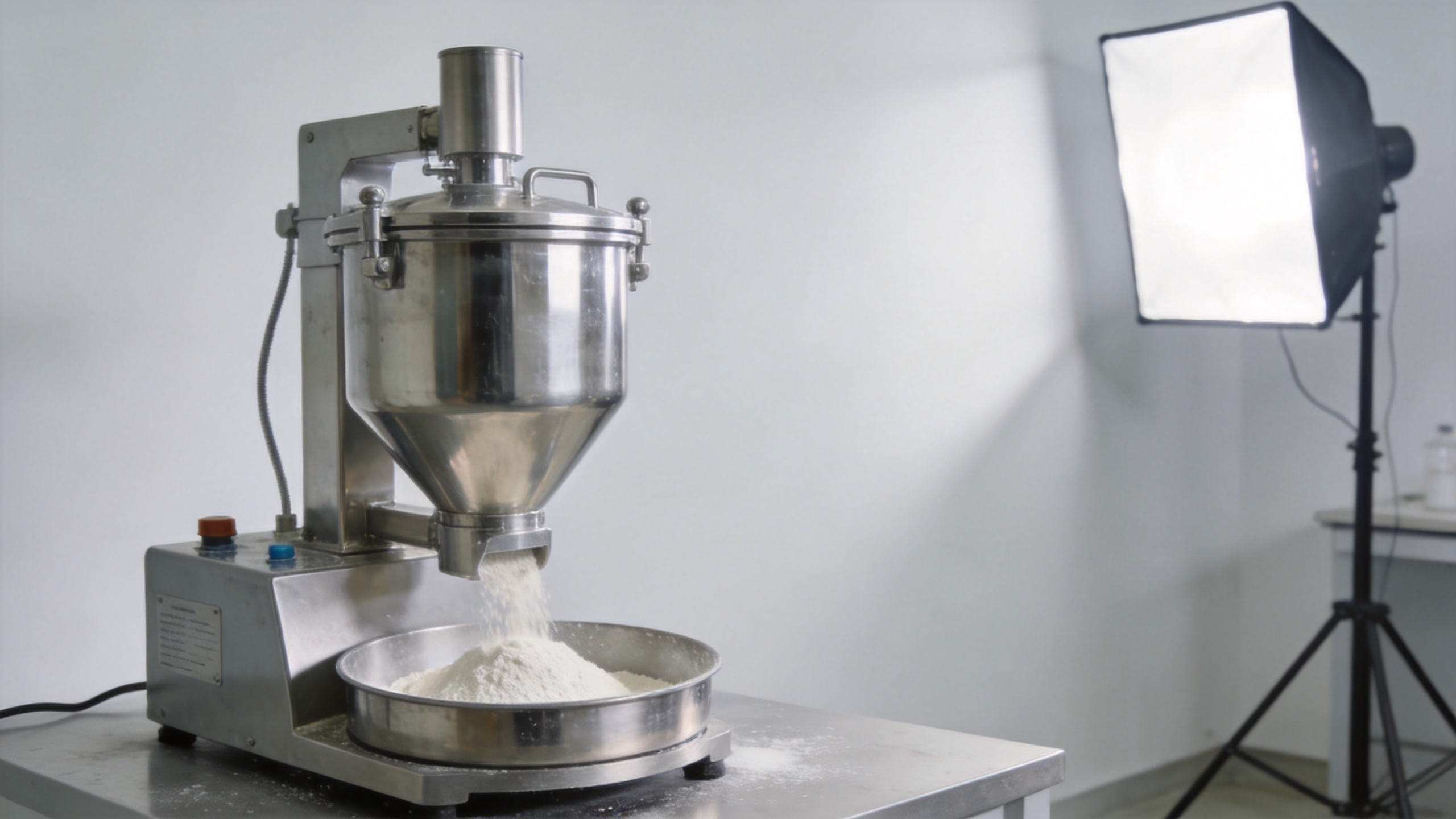
Batch size is a practical constraint, but it is also a scale-up variable. Select a lab mixer with a usable operating window that can accommodate planned development batches without forcing every run near an extreme fill level. Very low fills may change the circulation pattern; very high fills can reduce free movement. Record actual fill fraction, blend time, rotation or drive settings, loading order, and discharge approach for every run.
Scale-up should not be based on volume alone. The development team should compare geometry, fill level, powder properties, mixing energy, and material transfer steps between the bench unit and the proposed larger process. ICH Q8(R2) encourages a systematic development approach that draws on prior knowledge, experimental results, risk assessment, and a control strategy. In practice, that means treating each lab mixer experiment as evidence for a future process decision, not as a one-off demonstration.
Make Cleanability and Containment Part of the Selection
For pharmaceutical powder work, cleaning is a development variable as well as an operational convenience. Review contact surfaces, accessible corners, gasket design, discharge areas, and whether the vessel can be inspected after cleaning. A mixer for laboratory use should support a repeatable changeover routine that is practical for the number of formulations your team expects to handle.
Containment needs deserve the same early attention. If the formulation includes potent or sensitizing materials, map every powder-handling point: charging, vessel closure, mixing, sampling, discharge, and cleaning. The lab mixer should fit the site’s risk assessment and procedures; equipment alone does not establish a containment claim. Ask how sampling can be performed without disturbing the blend or creating an unnecessary exposure point.
Plan Sampling and Data Capture Before the First Trial
The value of laboratory mixing comes from the data it produces. FDA current good manufacturing practice Q&A materials note that variability between and within powder-blender sampling locations is a critical component of finished-product quality and should be evaluated. Your protocol should therefore define sampling locations, timing, analytical method, and how results will be reviewed before the batch is run.
For each lab mixer trial, retain a simple record of formulation code, material lot, loading sequence, fill level, operating settings, blend duration, sample locations, and observations during discharge. This makes it easier to recognize whether a result is linked to the formula, the method, or the equipment. It also gives quality and technical teams a clearer basis for deciding what to test next.
Compare Options With a Practical Evaluation Matrix
| Selection factor | Questions for the team | Evidence to collect |
|---|---|---|
| Powder fit | Is the blend free flowing, cohesive, low dose, or segregation prone? | Trial observations and representative samples |
| Batch window | Can the unit cover planned development fills? | Usable volume and fill-level records |
| Cleaning | Can contact areas be inspected and cleaned consistently? | Cleaning procedure and visual-access review |
| Sampling | Can samples represent different blend locations? | Sampling plan and repeatability results |
| Scale-up | What conditions must remain comparable later? | Documented process parameters and risk assessment |
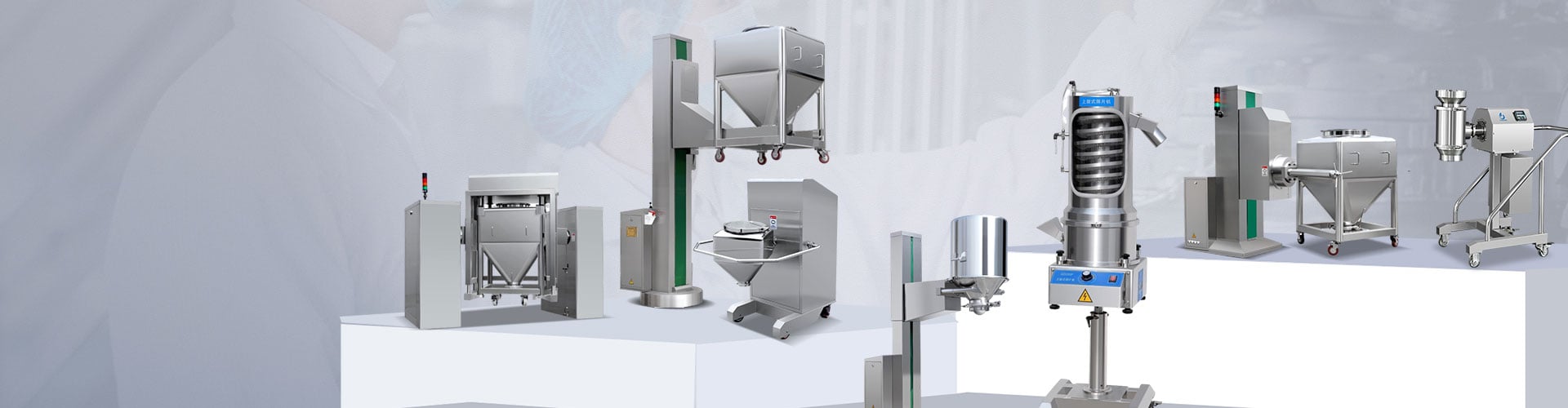
For teams evaluating a commercial lab mixer, review the available LABORATORY MIXER HSD product page alongside the site-specific development requirements. Confirm the actual configuration, materials of construction, controls, cleaning approach, and suitability through a technical discussion rather than inferring capabilities from a product name.
Final Checklist for Selecting a Lab Mixer
- Define the formulation and process question the trial must answer.
- Match the lab mixer mechanism to powder flow, shear sensitivity, and segregation risk.
- Use a realistic batch and fill-level window for the development plan.
- Evaluate cleanability, containment, sampling, and discharge as a connected workflow.
- Document conditions well enough to support comparison, troubleshooting, and scale-up.
A thoughtful lab mixer selection gives pharmaceutical development teams more than blended powder. It gives them a controlled way to learn, compare options, and build a stronger evidence trail for the next stage of development.